

Table of Contents
1. Introduction: The Ubiquity of Patterns in Nature and Human Creativity
Patterns are the recurring motifs that shape both the natural world and human innovation. From the spirals of galaxies to the intricate designs in art and technology, patterns serve as the language of nature and a foundation for human creativity. They allow us to decode complex systems, create aesthetically pleasing art, and develop advanced technological solutions.
Understanding these patterns is crucial across disciplines. In science, recognizing natural patterns helps explain phenomena like weather systems and biological growth. In art, they inspire compelling visuals and designs. In technology, patterns underpin algorithms in data compression and artificial intelligence.
This article embarks on a journey—from the basic mathematical principles that describe patterns to their applications in modern digital art and gaming, illustrating how timeless natural laws continue to shape our world today.
Table of Contents
- The Mathematical Foundations of Nature’s Patterns
- From Mathematical Models to Visual Patterns: Nature’s Blueprint
- Modern Artistic and Technological Applications of Patterns
- Deep Dive: The Complexity of the Mandelbrot Set and Its Artistic Inspiration
- Non-Obvious Connections: Patterns as a Bridge Between Nature and Technology
- The Future of Patterns: Unlocking New Frontiers in Science and Creativity
- Conclusion: Embracing the Harmony of Chaos and Order
2. The Mathematical Foundations of Nature’s Patterns
a. Chaos theory and the logistic map: Predictability and unpredictability
Chaos theory reveals how simple deterministic systems can produce complex, seemingly unpredictable behavior. The logistic map is a foundational equation illustrating this concept:
xₙ₊₁ = r xₙ (1 - xₙ)
Here, xₙ represents the current state, and r is a parameter controlling the system’s behavior. Small changes in r can lead from stable states to chaotic fluctuations.
In real-world applications, this model helps explain population dynamics where resources limit growth, or weather systems where small variations amplify unpredictability. Recognizing these patterns allows scientists to better predict or understand complex phenomena.
b. Fractals and self-similarity: Infinite complexity in natural forms
Fractals are structures characterized by self-similarity—patterns that repeat at various scales. The Mandelbrot set exemplifies this, showcasing infinite complexity within a finite boundary:
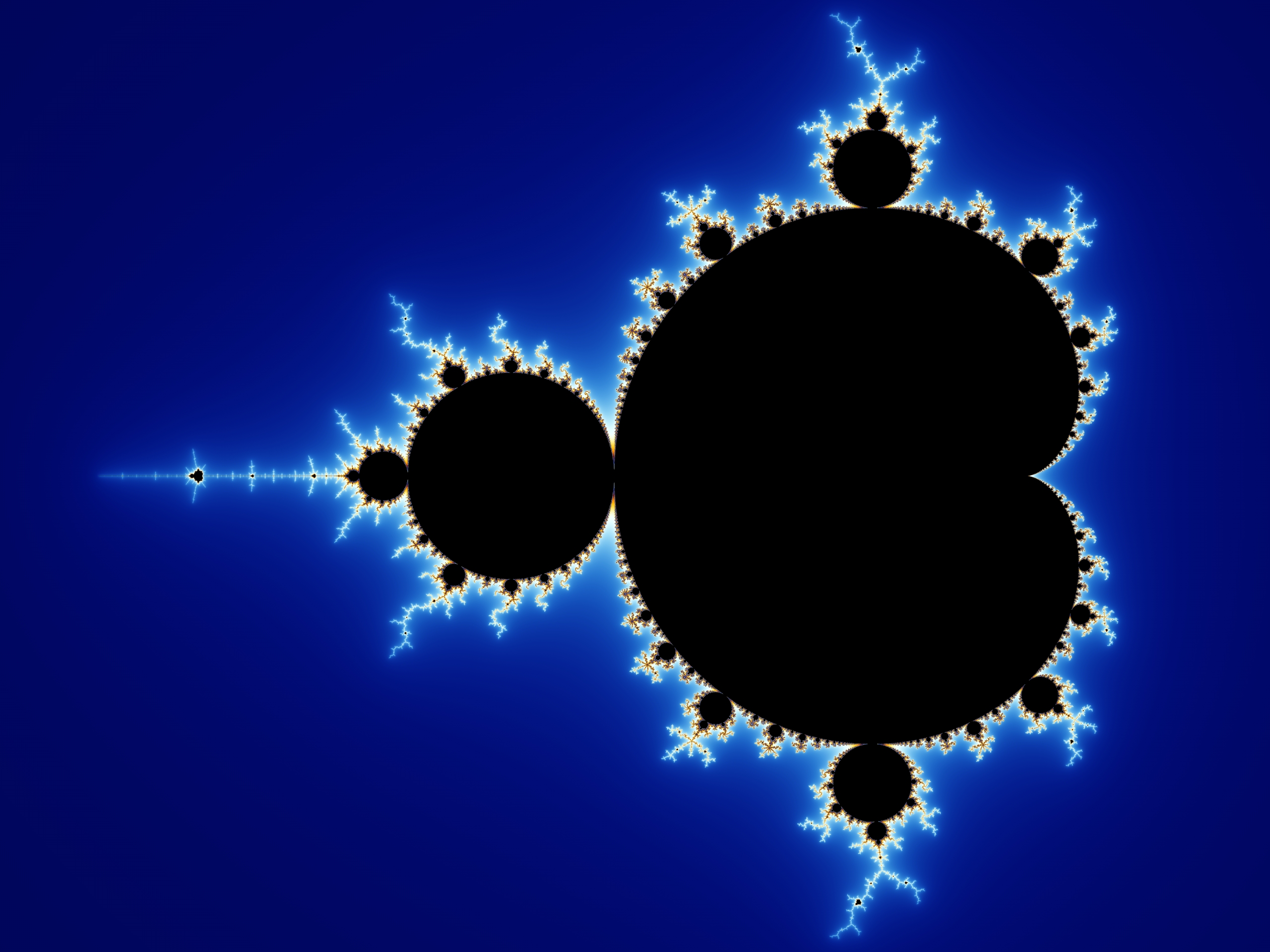
Natural fractals are abundant—coastlines, mountain ranges, and cloud formations all display self-similar patterns. These structures are not only aesthetically pleasing but also functionally efficient, allowing natural forms to optimize resources like surface area or structural strength.
c. Information theory basics: Quantifying uncertainty and complexity
Claude Shannon’s information theory introduces the concept of entropy as a measure of uncertainty or complexity within a data set:
H = -∑ p(x) log₂ p(x)
Higher entropy indicates more unpredictability, which has practical applications in data compression—reducing file sizes—or secure communication by understanding and managing informational complexity. JoBro sophia rain nude
3. From Mathematical Models to Visual Patterns: Nature’s Blueprint
a. How mathematical models explain natural structures
Mathematics provides a lens through which we can interpret natural designs. Equations like the Fibonacci sequence or logarithmic spirals describe how biological and cosmic structures develop, revealing an underlying order amidst apparent chaos.
b. Examples of natural patterns explained by mathematics
- The Fibonacci sequence appears in sunflower seed arrangements, pinecone scales, and even in animal horns. This sequence, where each number is the sum of the two preceding ones, leads to geometric patterns that optimize space and resource distribution.
- Logarithmic spirals are prevalent in shells like the nautilus and in spiral galaxies, where the radius increases exponentially with the angle, creating a harmonious and efficient growth pattern.
c. The role of chaos and order: Balancing unpredictability with structure
Natural systems embody a delicate balance—chaotic fluctuations are structured within overarching patterns. This interplay fosters resilience and adaptability, evidenced by phenomena like weather systems or biological evolution.
4. Modern Artistic and Technological Applications of Patterns
a. Digital art and computer graphics inspired by fractals and chaos
Fractal mathematics has revolutionized digital art, enabling the creation of complex, mesmerizing visuals. Artists and programmers generate fractal landscapes and abstract patterns that mimic natural forms, enriching visual storytelling and immersive experiences.
b. Pattern-based algorithms in modern gaming design
- Procedural generation leverages natural patterns to create vast, detailed virtual worlds dynamically. This technique reduces manual design effort and ensures varied, organic environments.
- A notable example is bet sizing in game environments like “Big Bamboo,” where pattern replication is used to craft immersive and coherent gameplay spaces, illustrating how natural principles inform entertainment.
c. Data science and machine learning: Recognizing and leveraging natural patterns
Machine learning algorithms excel at detecting subtle patterns within large datasets, enabling advancements in speech recognition, image processing, and predictive analytics. Recognizing natural patterns accelerates innovation across sectors.
5. Deep Dive: The Complexity of the Mandelbrot Set and Its Artistic Inspiration
a. Exploring the infinite complexity of the Mandelbrot set
The Mandelbrot set exemplifies how simple iterative rules can produce infinitely intricate boundaries. Zooming into its edge reveals self-similar structures at every scale, inspiring both mathematicians and artists alike.
b. Artistic interpretations and visualizations
Visual artists harness the Mandelbrot set’s mesmerizing forms to create digital art that emphasizes complexity and harmony. These visuals often serve as metaphors for the interconnectedness found within natural systems.
c. Lessons from the Mandelbrot set: Embracing complexity and self-similarity
The Mandelbrot set teaches us that complexity can emerge from simple rules, offering a paradigm for understanding the universe’s layered structures. It embodies the principle that order and chaos coexist, a concept central to both nature and human innovation.
6. Non-Obvious Connections: Patterns as a Bridge Between Nature and Technology
a. Biological systems and pattern recognition algorithms
Biological processes—from neural networks to DNA sequences—exhibit complex patterns that algorithms now mimic to improve machine learning and artificial intelligence. These patterns facilitate efficient information processing and adaptation.
b. The influence of natural patterns on modern engineering and design
Designers and engineers study natural fractals and flow patterns to develop sustainable architecture, efficient transportation systems, and resilient materials, demonstrating how nature’s blueprints inspire innovation.
c. Ethical considerations: Mimicking nature responsibly in technology
While harnessing natural patterns offers immense benefits, it also raises questions about sustainability and ethical use. Responsible innovation requires respecting the integrity of natural systems and avoiding overexploitation.
7. The Future of Patterns: Unlocking New Frontiers in Science and Creativity
a. Emerging research in chaos and complexity science
Advances in computational power are enabling deeper exploration of chaotic systems and fractal geometries, promising breakthroughs in understanding phenomena like climate change and biological evolution.
b. Potential innovations in gaming, virtual reality, and artificial intelligence
In gaming, procedural pattern generation enhances realism and diversity. Virtual reality environments increasingly mimic natural fractal landscapes, creating immersive experiences. AI models trained on natural patterns improve predictive capabilities.
c. How understanding nature’s patterns can inspire sustainable solutions
By studying natural efficiencies—like the spiral arrangements in plants—researchers develop sustainable farming, renewable energy systems, and eco-friendly materials, aligning technological progress with environmental stewardship.
8. Conclusion: Embracing the Harmony of Chaos and Order
“Patterns reveal that chaos and order are two sides of the same coin—interwoven principles that underpin the universe and fuel human innovation.”
Throughout history, mathematics has served as a vital lens to understand the intricate patterns woven into nature. Recognizing and applying these patterns fosters innovation—from the design of natural-inspired art to cutting-edge technologies like virtual worlds and AI.
By cultivating an awareness of the patterns around us, we can better appreciate the harmony inherent in chaos and order, inspiring future breakthroughs. For instance, in game environments such as bet sizing strategies in modern gaming exemplify how pattern replication and natural principles create engaging, coherent experiences.
Ultimately, embracing the interconnectedness of patterns in nature and technology not only deepens our understanding but also empowers us to develop sustainable, innovative solutions for the future.


